Most businesses think expansion means a permanent build, but that’s not always the case businesses automatically assume that when they need to grow, they need a bigger building, and that’s it. A bigger operation, a bigger building, a bigger commitment. This makes sense, at first glance, but until timelines start dragging on, operational pressures ratchet up, and construction delays start costing you money, that assumption just isn’t true. Across Australia, businesses that use semi permanent outdoor structures are already disrupting that equation in all sorts of industries, logistics, warehousing, events, and industrial operations. But many decision-makers still have no idea what these structures can actually do, and that lack of understanding often pushes them towards slower, more expensive solutions than they really need.
Traditional construction: one problem solved at the cost of another
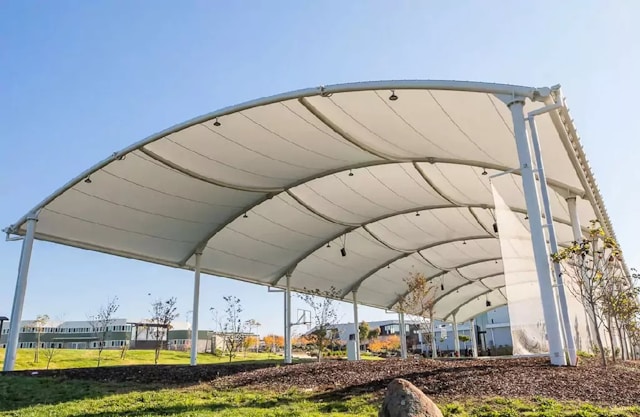
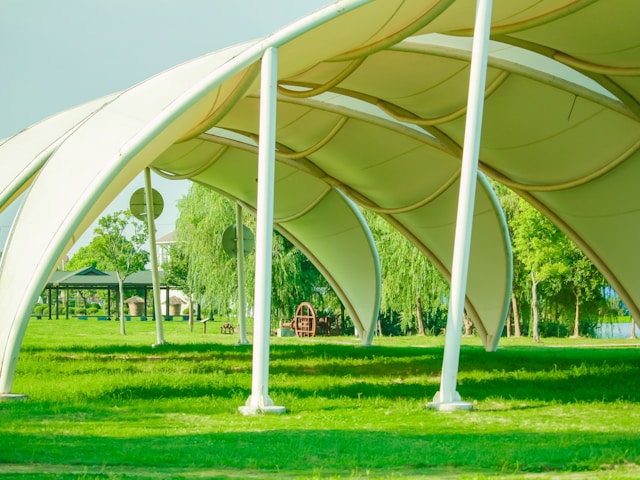
Permanent buildings offer stability, but flexibility is where many businesses are struggling. Markets change fast, but traditional construction takes for ever to catch up. You get an unexpected surge in seasonal storage or a sudden increase in supply chain pressure, and before you know it, you’re out of space. What looks like a building problem is all too often an operational timing thing. That’s why semi-permanent outdoor structures have become so attractive for businesses that need extra space without getting locked into a lengthy construction program. Modern modular systems let you increase usable space way faster than traditional builds ever could. In many cases, a clear span structure explained by a bit of engineering reveals why businesses are ditching rigid construction models in favour of something more flexible. Clear span designs give you the most usable internal space while supporting rapid deployment and future expansion. Rather than asking if expansion is on the cards, businesses are now asking how quickly they can get new capacity up and running.
Speed is a bigger deal than most people think
Installation speed is usually presented as a nice to have, but in reality, it really matters because it affects operational continuity. Traditional commercial construction projects in Australia are plagued by approval delays, labour shortages, and material scheduling problems. Semi-permanent structures cut through all that friction because they need less groundwork and can often be slotted into existing operational sites with minimal disruption. The Australian Bureau of Statistics says commercial development timelines are still facing delays and rising costs across the country. It’s not just a sign of a slowdown in the industry, it’s also a reminder of why businesses are increasingly prioritising adaptable infrastructure over rigid long-term builds. For operators, the practical impact is huge. Faster deployment means less downtime, faster inventory expansion, and less disruption to revenue-generating operations.
A common misconception about semi-permanent builds
The word “semi-permanent” is a real source of confusion. Some people assume semi-permanent outdoor structures are just fancy marquees or short-term shelters. But modern commercial systems are a whole different ball game. Engineered clear span systems are built for long-term commercial use, in industrial warehousing, loading zones, manufacturing overflow, sports facilities, and logistics operations. Many stay operational for years while still retaining the flexibility to relocate, expand, or reconfigure when operational priorities change. That’s why businesses that are researching the difference between temporary and semi-permanent buildings are increasingly realising the operational benefits of modular infrastructure. Permanent buildings lock you into fixed layouts, which is exactly the opposite of what a non-permanent outdoor structure does. It gives you the flexibility to evolve your operations without having to start the construction process all over again.
Industrial growth is laying down the gauntlet for flexible structures
Aussies in the warehousing and logistics game are getting pinched by the ecommerce boom, inventory splitting, and supply chain hiccups left right and centre. The more storage they need, the harder it is to keep up with demand using traditional means. Deloitte’s research shows how the ability to be agile has become a major battleground for logistics and industrial players. It’s not just about getting a bigger space, it’s about having infrastructure that can move and flex with the changing needs of the business. For many operators, semi-perm outdoor structures in Australia have been the game-changers they needed to get ahead by balancing durability with scalability and speed to market. This is especially true for businesses looking for outdoor logistics solutions, warehouse expansions and industrial overflow that won’t break the bank or lock them into permanent rebuilds.
The real upside is the freedom to breathe
Once a business gets its hands on some flexible infrastructure, it changes the way they see the world. Expansion doesn’t have to be a one-way ticket. Sites can be rearranged on the fly. And the pressure to lock in permanent costs just to deal with short-term operational issues, gone. Too many businesses miss this boat before they properly investigate semi-perm structures. The real benefit’s not just extra space, it’s the ability to respond quickly without getting stuck in the long-term financial rut. When businesses start comparing non-perm garden structures, industrial shelters and modular warehouse systems, they often find out that deployment speed and operational flexibility are just as important as the upfront cost. In industries where timing is everything for the bottom line, that flexibility becomes more than just a nice to have, it becomes a key to unlocking their competitive edge.